Right now, hiring lives in your head.
Who did we call back. Who is waiting on us. Who has been sitting for a week. Put every applicant on one board, in the stages your shop actually uses, and the answer is on the screen instead of in somebody's memory.
One of Indeed’s 2025 Platinum ATS Partners.
5,000+ growing businesses hire on AvaHR without a recruiting team.
Your stages. Not somebody's idea of a hiring funnel.
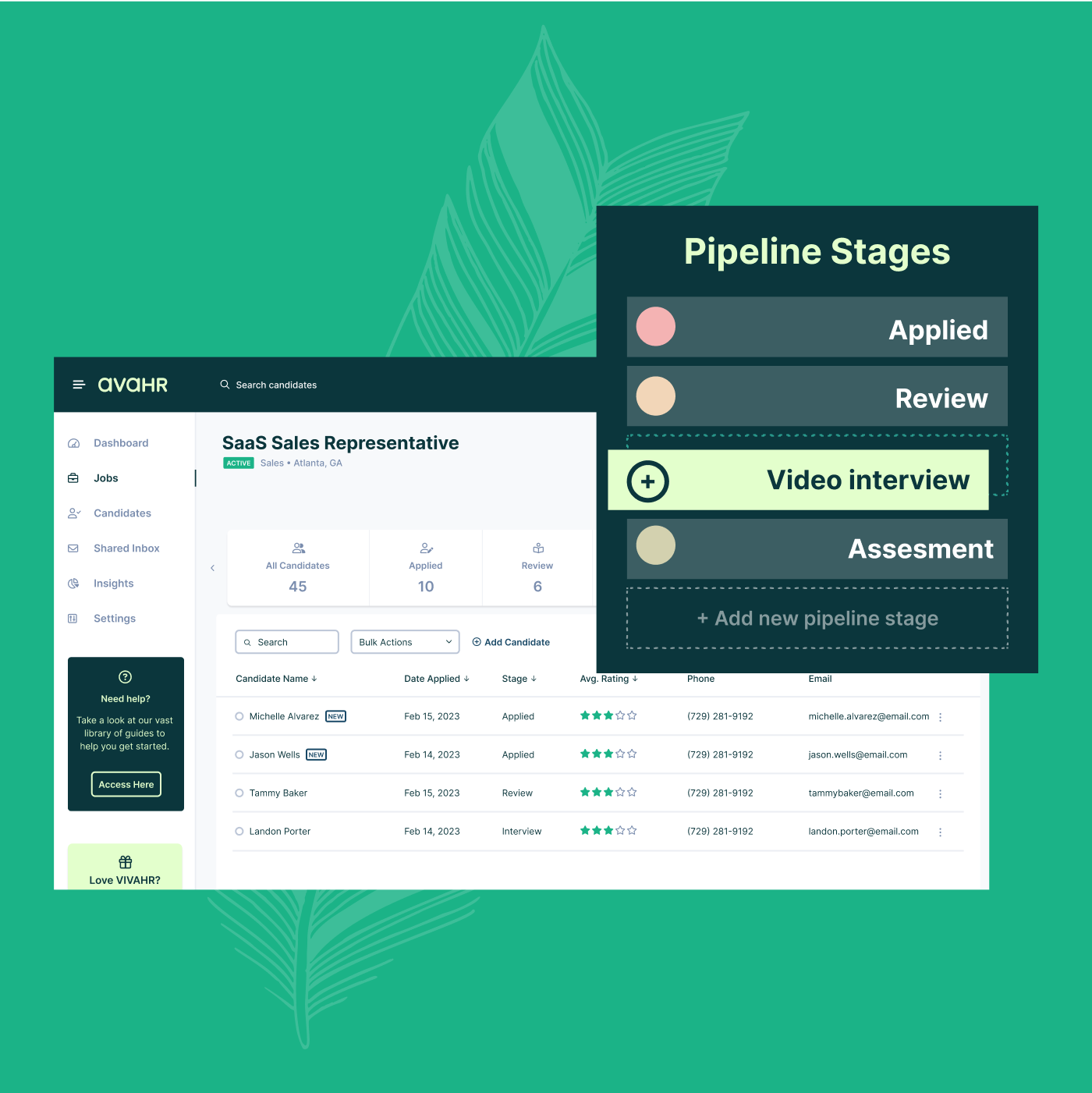
A shop that runs working interviews does not hire like a dental office. Name the stages the way your team says them out loud, and the board matches how you already work.
Set the stages you actually use
Start from a preset for your industry, then rename, reorder, add or delete. Working interview, ride-along, reference check, whatever the real steps are. Each job can run its own pipeline.
Drag someone forward and the work happens
Moving a card is the trigger. The next text goes out, the interview kit lands on the interviewer, the scorecard gets requested. You moved one person and four things followed.
See what is stuck before it costs you
Every card shows how long it has been sitting. When a good candidate goes quiet for nine days the board says so, instead of you finding out when they take the other offer.
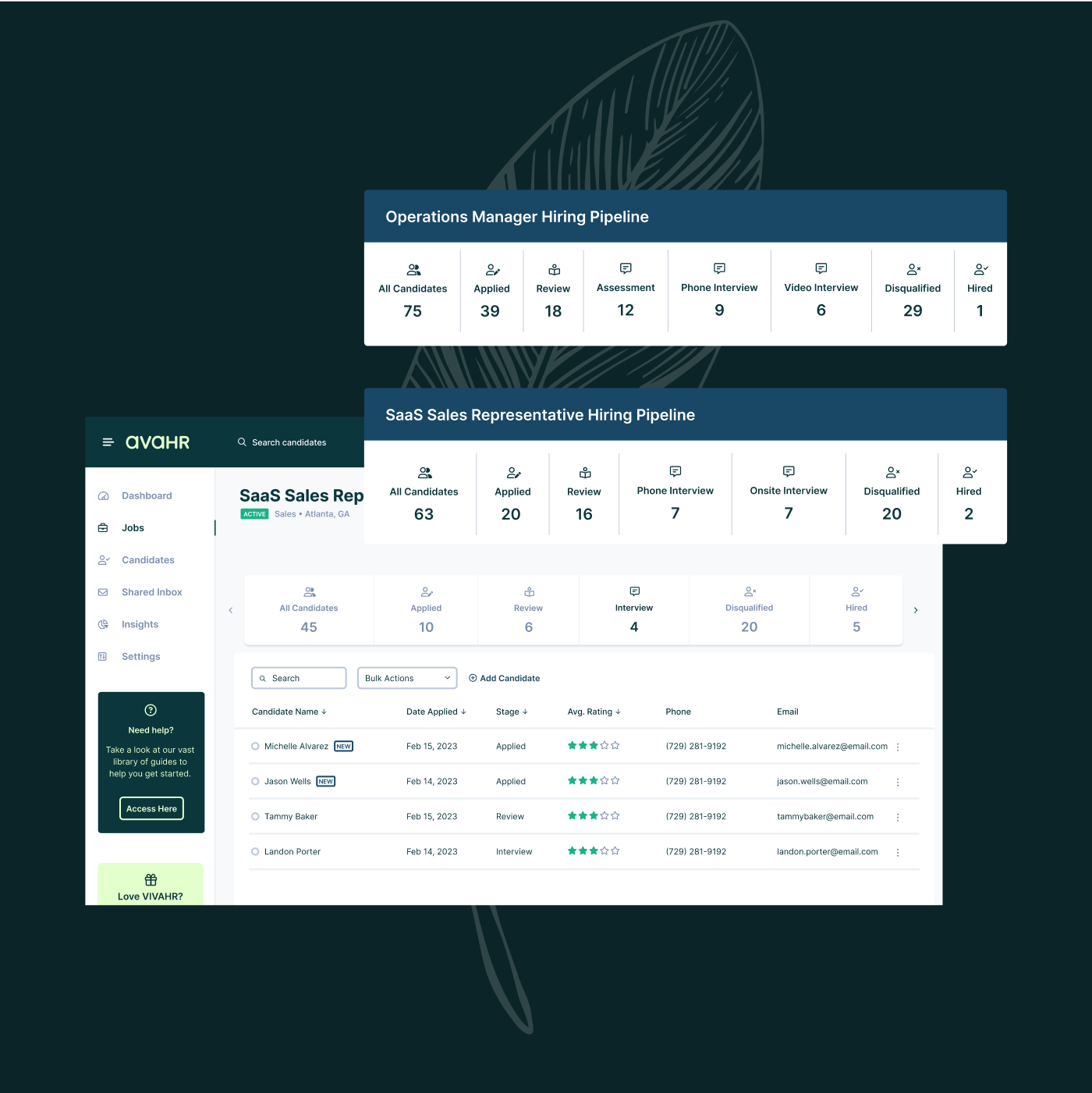
Everyone you are hiring, on one screen.
Drag a card and the person moves, the follow-up fires and the team sees it. The one sitting too long is flagged before they go somewhere else.
Moving a card is the trigger. The rest runs itself.
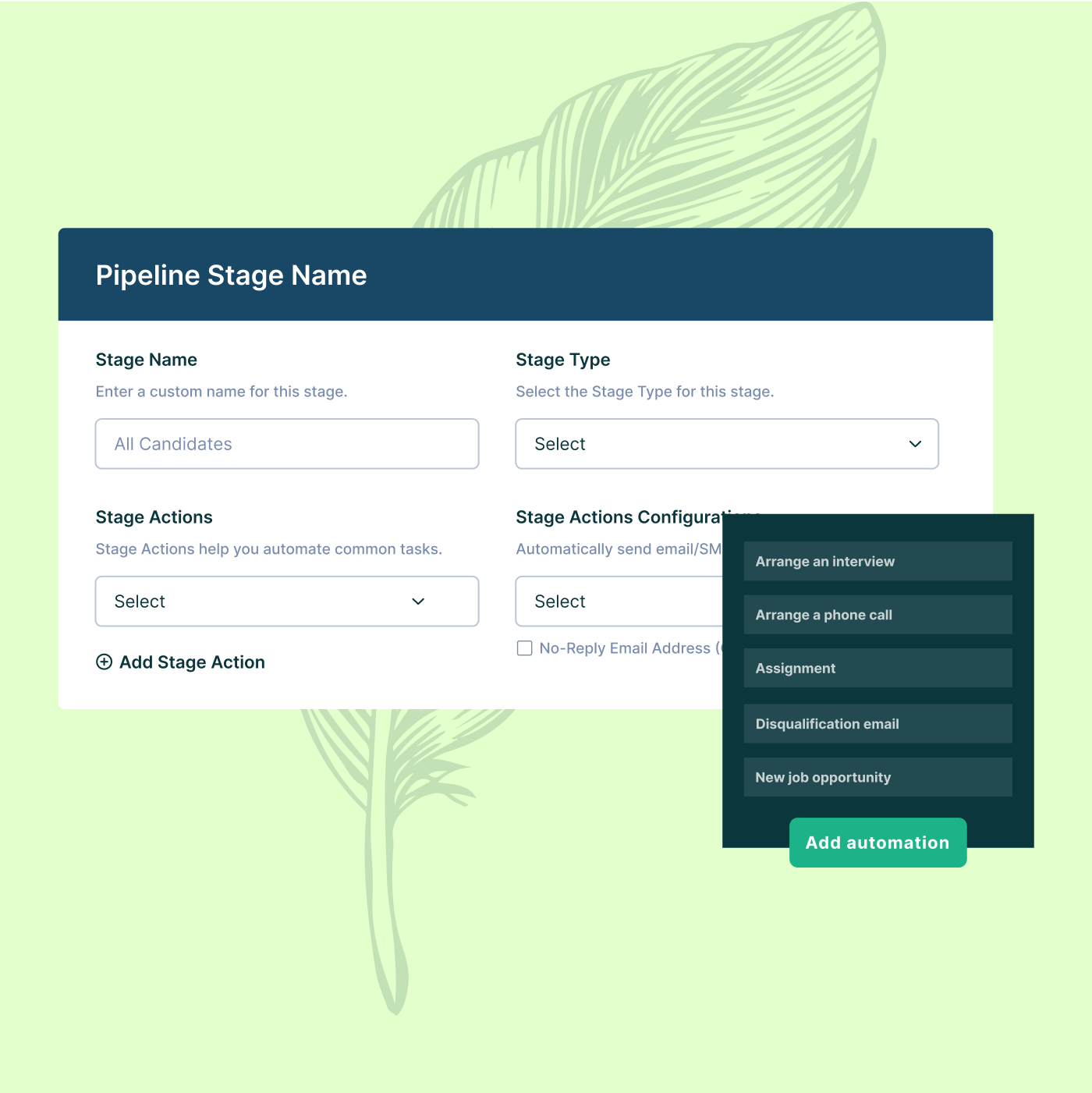
Every stage carries its own rules, written once in plain language. Pick a stage to see what fires the moment somebody lands in it, and what it did this week without anyone opening the system.
Choose an action to run automatically when a candidate enters Phone screen.
Five stages, and every one is yours to name.
The board ships with the five a shop already uses, and nothing about them is fixed. Rename them, reorder them, add the ones your trade needs, and every job can carry its own set.
Applied, phone screen, interview, offer, hired
Drag a stage to reorder it, switch one off if your shop does not use it, or add a working interview and a ride-along. The line under each name tells you where your people actually are.
Nobody sits there quietly
A card that has not moved goes amber, and the person who owns it hears about it. You find out on day seven, not when the candidate takes the other job.
Board or list, same truth
Flip to list when you want to sort seventeen people by how long they have waited.
One drag, four follow-ups
Moving a card sends the text, books the room and asks for the scorecards.
Every job, its own board
A dental office and a service truck do not hire the same way, so they do not share stages.
Nobody falls into the gap between two people.
“We lost a good plumber because I thought my office manager had called him and she thought I had. He took a job across town while he sat in nobody's column. Now everybody looks at the same board and that does not happen.”
Dave at Valley Plumbing & Drain
The board is where the rest of it plugs in.
Every stage change is a hook. These are the things that hang off it, so moving one card does the work of four follow-ups.
Automated actions
The rules that run when a card moves. Send the text, request the scorecard, notify the interviewer, nudge the ones going quiet.
Explore →Approvals
The sign-off step before an offer goes out, sitting in the pipeline instead of in your inbox.
Explore →Team scorecards
Everyone who met the candidate scores them on the same criteria, and the average rides on the card.
Explore →Interview scheduling
They pick a time, it books, and the card moves to Interview on its own.
Explore →Shared inbox
Every text and email attached to the person on the card, so whoever picks it up can see what was already said.
Explore →Insights & analytics
Where people drop out, how long each stage takes, and which source actually produces hires.
Explore →Before you move the first card.
Still deciding? On a walkthrough a specialist will build your stages with you, using the jobs you are hiring for right now.
Can different jobs have different stages?
Yes. A service tech might go through a ride-along that a front-desk hire never sees, so each job can run its own pipeline. Set up the ones you use most as presets and every new posting starts from the right board.
What actually happens when I drag someone forward?
Whatever you told it to do. Most shops have the stage send a text or email, request scorecards from the people who interviewed, and notify whoever owns the next step. You can also leave a stage with no automation at all and just use it to see where people are.
Can my whole team see the board, or just me?
Everyone you invite sees the same board, and you control what each person can do. A hiring manager can move their own candidates while a lead tech only sees the ones they are interviewing.
How do I know somebody is stalling?
Every card shows how long it has been in its current stage, and the ones sitting past your threshold get flagged. That is usually the difference between calling a good candidate on day three and losing them on day nine.
What happens to people we pass on?
They come off the board and stay in your candidate database with the reason and the notes attached. Next time a similar job opens you can pull up everyone who reached the interview stage last time instead of starting over.