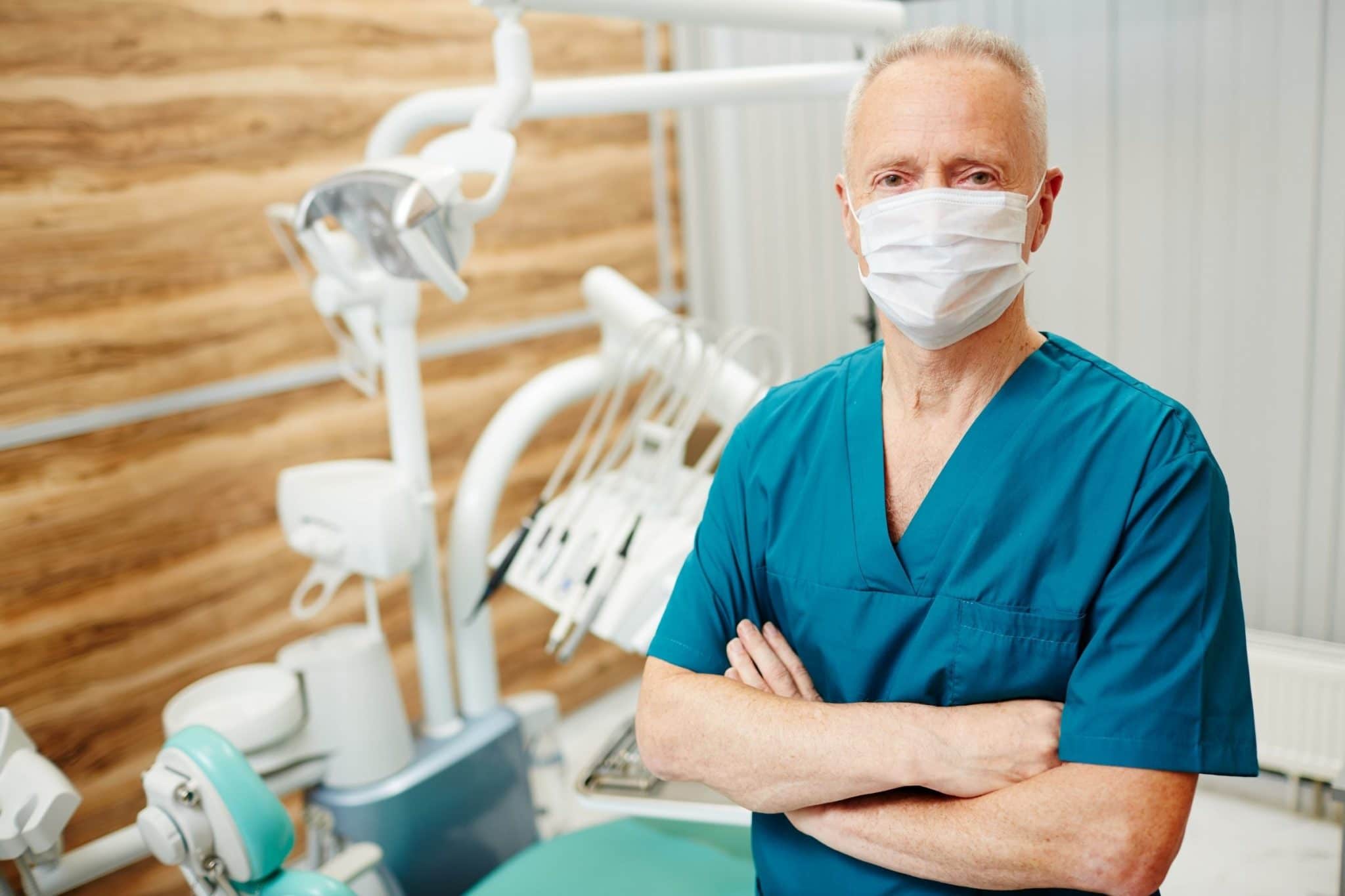
Oral and Maxillofacial Surgeon job description template
If you are hiring for this role, start here. This free template is our detailed definition of the position, with everything you need to find and hire the right person. Copy it, add your own requirements, and post it.
What is an Oral and Maxillofacial Surgeon?
An Oral and Maxillofacial Surgeon is a highly specialized medical professional who focuses on diagnosing and treating conditions, injuries, and diseases related to the face, mouth, and jaw. From an employer's perspective, this role is critical for providing advanced surgical care that goes beyond general dentistry, addressing complex issues such as facial trauma, jaw deformities, oral cancer, and reconstructive procedures.
An ideal candidate for this position possesses exceptional surgical skills, extensive knowledge of facial anatomy, and the ability to collaborate with multidisciplinary teams, ensuring comprehensive patient care. Try and look for candidates with previous experience, great attention to detail, and problem-solving skills. They should also demonstrate a commitment to precision, problem-solving, and patient communication, as their expertise directly impacts the outcomes and satisfaction of the patients they serve.

The top Oral and Maxillofacial Surgeon skills.
Five things separate a strong hire from a résumé that reads well. Use these as your scorecard criteria.
The job description, ready to post.
Copy it as written, or edit it until it sounds like your company. Both work.
We are seeking an experienced and highly skilled Oral and Maxillofacial Surgeon to join our team of healthcare professionals. Your duties will include diagnosing patients, determining their treatment and need for surgery, and performing scheduled and emergency treatments. In this position, you will also be expected to maintain and monitor patient records and provide great aftercare.
In order to be successful as an oral and maxillofacial surgeon, you should have empathy and be able to operate in time-sensitive situations without feeling stressed. Our ideal candidate is someone with good communication and interpersonal skills who is detail-oriented and has great medical knowledge.
Duties and responsibilities
- Diagnose and treat conditions affecting the mouth, jaw, face, and neck, including trauma, deformities, and diseases.
- Perform surgical procedures such as wisdom tooth removal, dental implants, corrective jaw surgery, and reconstructive facial surgery.
- Evaluate and interpret diagnostic imaging, such as X-rays and CT scans, to develop treatment plans.
- Collaborate with other healthcare professionals, including dentists, orthodontists, and oncologists, to provide comprehensive care.
- Administer anesthesia and ensure patient safety during surgical procedures.
- Manage pre-operative and post-operative care, including monitoring recovery and addressing complications.
- Educate patients and families about treatment options, surgical procedures, and recovery processes.
- Maintain accurate medical records and adhere to healthcare compliance and safety standards.
- Stay updated on advancements in oral and maxillofacial surgery techniques and technologies.
- Participate in continuing education and professional development activities.
Requirements
- Doctor of Dental Surgery (DDS) or Doctor of Medicine in Dentistry (DMD) degree.
- Completion of an accredited residency program in Oral and Maxillofacial Surgery.
- Board certification or eligibility in Oral and Maxillofacial Surgery (ABOMS or equivalent).
- Valid state licensure to practice as an Oral and Maxillofacial Surgeon.
- Proficiency in advanced diagnostic tools, such as X-rays, CT scans, and MRI interpretation.
- Expertise in administering anesthesia and managing patient safety during procedures.
- Strong knowledge of facial anatomy, pathology, and surgical techniques.
- Excellent manual dexterity and precision for performing intricate surgical procedures.
- Exceptional interpersonal and communication skills for interacting with patients and multidisciplinary teams.
- Commitment to ongoing education and staying updated on the latest surgical advancements.
Take the template with you
Copy it straight into your job board or ATS, or have it emailed to you with the interview questions for this role.
Degree first, then the certification.
From an employer's perspective, the educational requirements for an Oral and Maxillofacial Surgeon are foundational to ensuring the candidate possesses the expertise and qualifications needed for this highly specialized role. Candidates must hold a Doctor of Dental Surgery (DDS) or Doctor of Medicine in Dentistry (DMD) degree from an accredited dental school, which provides them with a strong background in oral health and general dentistry.
Additionally, they must complete a rigorous residency program in Oral and Maxillofacial Surgery, typically lasting four to six years, where they gain hands-on experience in surgical techniques, anesthesia, and patient management. Employers also value board certification or eligibility through recognized boards, such as the American Board of Oral and Maxillofacial Surgery (ABOMS), as it demonstrates the candidate's commitment to meeting the highest standards of the profession. These educational milestones ensure the surgeon has the technical knowledge, clinical skills, and credibility to provide exceptional patient care.
Board Certification in Oral and Maxillofacial Surgery
Demonstrates expertise and commitment to the highest standards in oral and maxillofacial surgery.
American Board of Oral and Maxillofacial SurgerySample interview questions for an Oral and Maxillofacial Surgeon.
Once you have gathered the applications, work through these in order. Twelve questions across four areas, enough to tell your shortlist apart.
- What inspired you to pursue a career in Oral and Maxillofacial Surgery?
- How do you handle high-pressure situations in your personal and professional life?
- Can you describe a challenging case that shaped your approach to patient care?
- How do you foster a positive work environment within a surgical team?
- Can you share an experience where you resolved a conflict with a colleague or staff member?
- What steps do you take to ensure adherence to workplace policies and standards?
- How do you prioritize tasks and manage time in a busy clinical or hospital setting?
- What strategies do you use to lead and motivate a multidisciplinary team?
- How do you approach decision-making when managing complex cases?
- How do you stay updated on advancements in oral and maxillofacial surgical techniques?
- Can you walk us through your approach to planning a complex reconstructive surgery?
- How do you ensure precision and patient safety during high-risk procedures?
How much to pay when hiring.
Annual pay by percentile. Where you land depends on the size of the cycle they will own, and the 25th percentile is usually where a first analyst hire sits.
Hourly equivalents run from $74 at the 10th percentile to $192 at the 90th.
Candidates may apply under a different name.
Post the title your industry uses and keep the rest of the description. These three roles overlap enough that the same posting usually reaches all of them.
Three titles, one description.
Search behavior varies by industry, so the same job is advertised under several names. If you are unsure which one your candidates search for, run two titles and see which fills.
Dentist
Dentists are healthcare professionals responsible for taking care of our teeth, gums, oral tissue, and mouth.
$189,979 medianFrequently asked questions.
What qualifications are necessary to become an Oral and Maxillofacial Surgeon?
To become an Oral and Maxillofacial Surgeon, individuals must complete a Doctor of Dental Surgery (DDS) or Doctor of Dental Medicine (DMD) degree, followed by a postgraduate residency program in oral and maxillofacial surgery.
State licensure is also required to practice.
What are the primary responsibilities of an Oral and Maxillofacial Surgeon?
Oral and Maxillofacial Surgeons specialize in performing surgical procedures involving the mouth, jaws, and facial structures.
Their primary responsibilities include extracting teeth, diagnosing and treating oral diseases and injuries, performing corrective jaw surgery, and administering anesthesia.
How do Oral and Maxillofacial Surgeons stay updated on advancements in their field?
Oral and Maxillofacial Surgeons stay updated on advancements through continuing education courses, attending conferences and seminars, and staying informed about the latest research and innovations in oral and maxillofacial surgery.
What skills are essential for success in the role of an Oral and Maxillofacial Surgeon?
Key skills for Oral and Maxillofacial Surgeons include surgical proficiency, diagnostic expertise, knowledge of anesthesia techniques, effective communication skills for interacting with patients and colleagues, and the ability to work well under pressure in emergency situations.
Other job description templates.
Same format, same free, same median pay data. Browse the full library if the role you are hiring for is not here.
Dental Laboratory Technicians
A dental laboratory technician's job is to prepare dentures, crowns, and other prosthetic devices.
$42,110 medianDental Office Manager
A Dental Office Manager is a key administrative professional responsible for ensuring the smooth and efficient operation of a dental practice.
$60,532 median